
How Embroidery Shop Management Software Streamlines Production
Discover how embroidery shop management software helps manage orders, schedule jobs, track production and reduce delays across your embroidery shop.
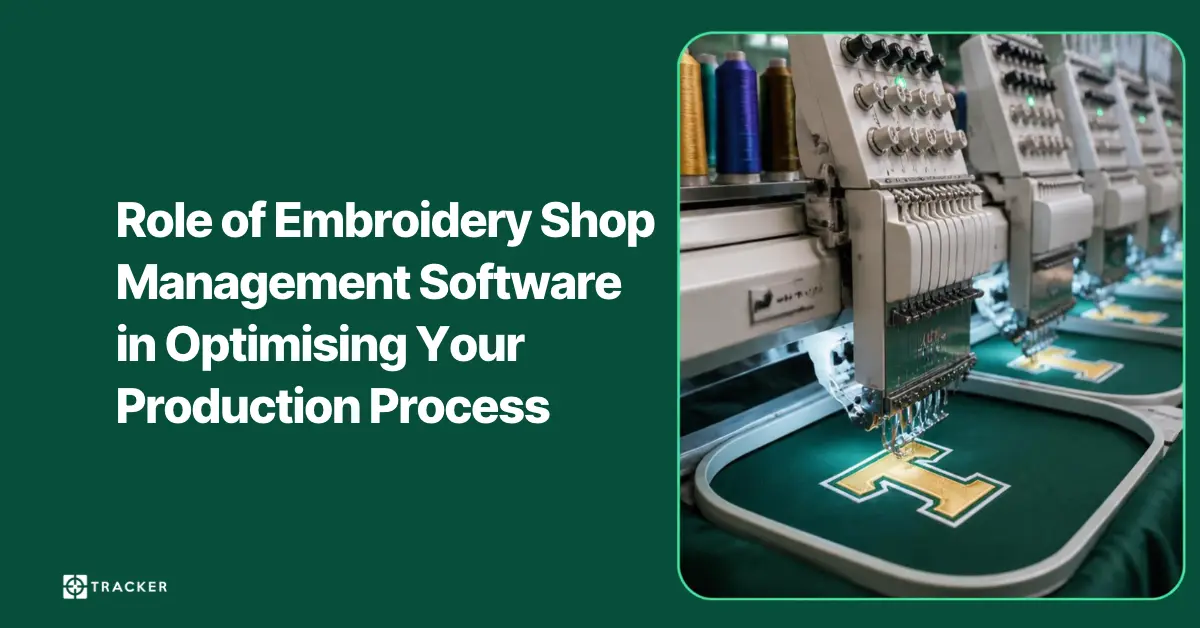
Embroidery shop management software eliminates production bottlenecks by connecting digitised stitch files, thread charts, proofs, and machine schedules to a single live order record. Instead of operators hunting through email chains or paper job sheets, your team sees exactly which orders are prepped, approved, and ready to stitch.
Problems can arise in the process of embroidery production that delay the start of work for several hours. A DST file cannot be located, garments are out of stock, colour specifications are missing from the work order, or machine allocations have shifted since the job was booked.
Many embroiderers manage these coordination challenges using emails, shared cloud storage, spreadsheets, and whiteboard markers when starting out.
However, as order volumes increase, manual coordination breaks down. Team members across sales, art, purchasing, and production end up referencing conflicting versions of the same order. When operators have to piece together information from three different places just to hoop a shirt, production efficiency plummets.
Embroidery shop management software provides a direct solution to this problem. All departments share the same central order record, eliminating information silos and keeping machine heads running smoothly.
In this blog post, we’ll explain what embroidery shop management software does, how it accelerates production, and the key benefits it brings to your shop floor.
What Does Embroidery Shop Management Software Do?
Embroidery shop management software captures and unifies all operational details connected to an order: customer records, quotations, original vector artwork, digitised stitch files, proof approvals, blank garment purchase orders, job scheduling, and live shop-floor status.
On the production floor, the greatest advantage is having immediate access to complete, accurate job specifications. Your embroidery machine operator should never have to search an email thread for a thread palette, dig through a shared network folder for a DST file, or rely on a handwritten note to confirm logo placement.
With dedicated embroidery shop management software:
- Sales, artwork, purchasing, and production teams work from one live record.
- When a customer resizes a chest logo or alters garment quantities, the revision updates everywhere instantly.
- Approved files lock automatically, preventing outdated versions from reaching the floor.
It is important to distinguish shop management software from digitising software. Digitising software (like Wilcom or Pulse) is designed to create and modify stitch patterns. Shop management software oversees the entire commercial workflow—from customer quote and blank procurement to machine scheduling and dispatch.
9 Production Advantages of Embroidery Shop Management Software
Here are nine key areas where embroidery shop management software transforms production throughput:
1. Fewer Artwork Mix-Ups and Wrong Stitch Files
Every customer logo often involves multiple related files: the original vector graphic, proof PDF, digitized EMB project, and DST output file, plus separate revisions for different garment placements (e.g. left chest vs cap profile).
When files are scattered across personal desktops, email inboxes, and shared network drives, running an outdated file is an accident waiting to happen.
Embroidery management software anchors the approved stitch file directly to the specific job record. Operators only see the verified, approved file for that exact run. When a customer reorders six months down the line, the team can pull up the previous job and use the verified file without hunting through archives.
2. Better Job Instructions for Your Embroidery Staff
A stitch file alone is only part of the job briefing. Machine operators also require:
- Thread colour codes and sequence order
- Precise embroidery placement (e.g. 7cm down from collar, centre chest, right sleeve)
- Correct hoop size and frame configuration
- Specific backing and stabiliser requirements
- Garment size breakdown and individual name personalisations
When job specs are transferred manually across disparate tools, details get missed. Complete management software bundles all technical notes into one clear job sheet or digital screen right beside the machine.
3. More Accurate Embroidery Production Scheduling
In embroidery, scheduling cannot be based solely on piece count and due dates. Two orders of 100 shirts can require radically different run times depending on stitch count, thread changes, trimming, framing difficulty, and garment bulk.
An order with a 4,000-stitch logo will finish in a fraction of the time needed for a 15,000-stitch jacket back. Effective embroidery production scheduling factors in total stitch counts, machine heads, and changeover times so production managers can accurately forecast capacity without overpromising delivery dates.
4. Fewer Delays From Jobs That Are Not Ready to Stitch
Having a scheduled production date doesn’t mean a job is actually ready to run. The customer might still be reviewing the proof, blanks may be stuck in transit, or the digitised file may still need a test sew-out.
If incomplete jobs clutter the production queue alongside jobs that are fully prepped, operators waste time sorting through work they cannot start. Management software introduces clear “Production-Ready” gating: jobs only enter the active machine queue when artwork is approved, files are uploaded, and blank garments have been received.
5. Better Control of Multi-Garment and Personalised Orders
Customer orders regularly include mixed garment types—such as polos, softshell jackets, winter beanies, and caps—all branded with the same corporate identity but requiring different embroidery scales, backings, and stitch files.
Caps, for instance, need specialised curved digitising, while thick jackets require a larger stitch profile than lightweight polos. Shop management software keeps line-item specifications segregated under the parent order. For personalised uniforms, individual names and sizes remain tied to the correct garment item throughout production.
6. Improved Tracking of All Embroidery Orders
When only the production manager knows where jobs stand, every customer inquiry requires walking the shop floor and interrupting machine operators.
A visual production board provides instant visibility across every stage: artwork pending, customer approval, blanks received, queued for stitching, in production, quality check, and ready for dispatch. Sales staff can answer client queries in seconds without pulling operators away from running machines.
7. Reduced Production Delays Due to Missing Garments
Embroidery cannot start until blank garments arrive on the floor. When sales confirms an order, purchasing orders blanks, and production schedules the machine without checking stock receipts, operators face unexpected bottlenecks.
Integrated software links purchase orders directly to production jobs. Operators can see immediately whether blank goods have arrived, been checked in, and staged for hooping before loading threads onto the machine.
8. Less Rework, Waste and Avoidable Embroidery Errors
Embroidery mistakes are notoriously expensive because stitches cannot easily be removed without damaging the garment fabric. Running the wrong logo revision, threading incorrect colour numbers, or misplacing a staff name ruins expensive outer garments and wastes valuable machine capacity.
Consolidating approved files, thread specs, and personalisation rosters inside a single digital record dramatically reduces avoidable operator errors and costly garment replacements.
9. Better Control of Machine Capacity and Rush Orders
When a valuable client calls with an urgent turnaround request, can you fit it in without jeopardising existing commitments? If answering that requires mental arithmetic and manual whiteboard checks, mistakes are inevitable.
Real-time machine scheduling displays exact head capacity and scheduled run hours. Managers can quickly identify open production slots and slot in rush jobs with confidence.
What Should Be Included in the Right Embroidery Shop Management Software?
The right software should address the specific operational bottlenecks in your shop. Core capabilities to prioritize include:
- Stitch file and logo management: Secure cloud storage for EMB and DST files with revision histories and approval tracking.
- Proof and approval workflows: Easy digital proof delivery with customer sign-off capture.
- Detailed production specifications: Thread palettes, hoop requirements, placements, and stabiliser notes.
- Stitch-count-aware scheduling: Machine scheduling calibrated to actual embroidery speeds and multi-head capacities.
- Live job status tracking: Real-time visibility from artwork prep to packing.
- Blank garment tracking: Clear status of supplier orders and warehouse check-in.
- Comprehensive reporting: Historical job data, scrap tracking, and machine throughput analytics.
How Tracker Can Help Your Business
Tracker is purpose-built for garment decorators, providing an integrated platform that connects artwork, production scheduling, and machine workflows:
- Cloud Logo Management: Store all embroidery formats (EMB, DST, PES) alongside customer proofs and approvals in Tracker Logo Management. Send approved files directly to machine heads via barcode scan.
- Dynamic Production Scheduling: Balance embroidery machines alongside screen printing and DTG lines with Tracker Production Scheduling. Gain complete visibility into machine capacity and bottlenecks.
- Digital Proof Approvals: Generate professional mockups and capture client approvals in Tracker Proof Approvals, ensuring only signed-off artwork is released to production.
Learn how Tracker can transform your embroidery shop floor. Book a demo with our workflow specialists or get started with Tracker today.
Final Thoughts
Whiteboards and spreadsheets serve small startup shops adequately, but they quickly become liabilities as your customer base expands and multiple machines are added. When order complexity rises, manual systems lead to misplaced stitch files, production interruptions, and costly garment errors.
Implementing embroidery shop management software gives your team a reliable operational foundation. By unifying files, instructions, schedules, and order statuses, your shop can produce more volume with higher consistency and fewer administrative headaches.
Will Hemming
Founder & Technical Director
Related Articles
Digital Proof Approvals + PLM Integration = Faster Licensed Team Gear Turnaround
How combining digital proof approvals with PLM distributor integrations accelerates licensed team gear production while maintaining compliance.
Read More Production Scheduling Secrets: Thread Colour Optimisation & Machine Barcode Integration
Learn how thread colour batching and barcode-to-machine integration can increase your embroidery and DTG throughput by 30–40%.
Read More
7 Signs You Need Print Production Workflow Software
Missed deadlines, delayed orders or production bottlenecks? Discover 7 signs your print shop needs print production workflow software to stay organised.
Read MoreSubscribe to Our Newsletter
Get the latest articles, product updates, and workflow tips delivered straight to your inbox.
By subscribing, you agree to our Privacy Policy and consent to receive updates from our company.