
What is DTG Printing? A Beginner’s Guide for Decoration Shops
Learn what DTG printing is, how it works, its benefits, costs and limitations, and how decoration shops can use it for custom apparel printing.
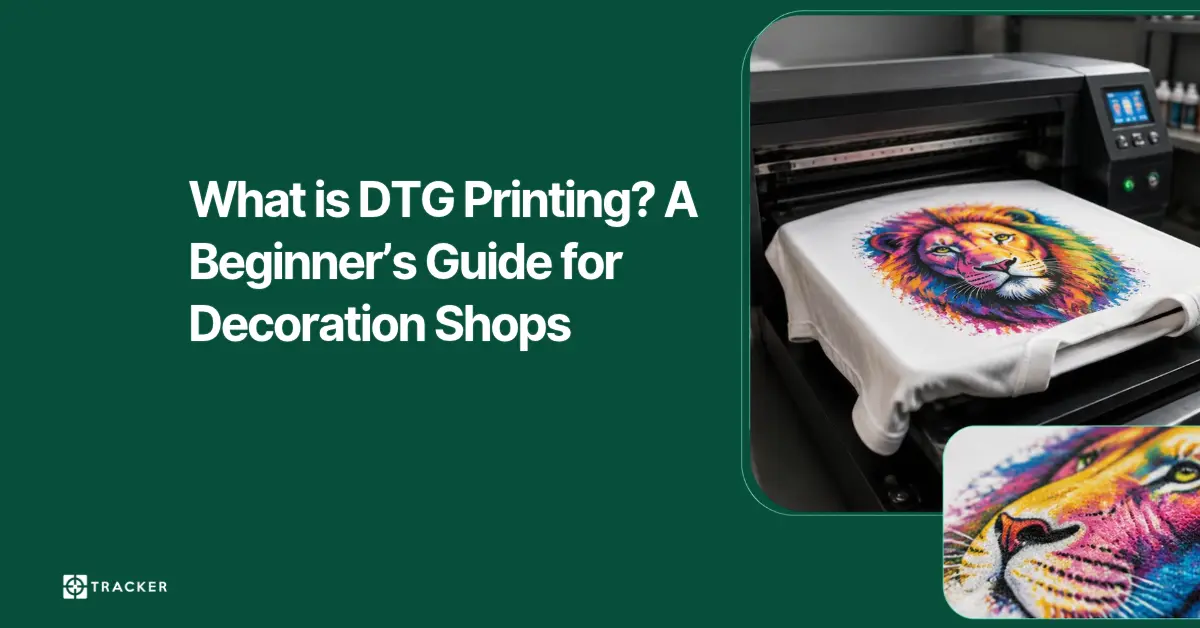
Direct-to-garment (DTG) printing uses specialised textile inkjet technology to apply water-based inks directly onto fabric without screens. It excels at high-detail, full-colour photographic prints and on-demand short runs on 100% cotton garments. This guide walks decoration shops through the end-to-end DTG process, from pretreatment to curing.
Direct-to-garment (DTG) printing makes use of a specialised inkjet printer which applies water-based textile ink directly onto the fabric surface of an apparel item. This is an exceptionally practical method for decoration shops handling artwork featuring photographic elements, gradients, fine details, or dozens of vibrant colours—especially when the order quantity is too small to justify the setup cost of traditional screen printing.
With DTG, you can switch between designs without burning a single screen, digitally produce full-colour graphics on demand, and offer one-off personalised products with minimal setup overhead.
At the same time, producing retail-grade DTG prints requires mastering multiple variables: fabric composition, proper pretreatment, resolution-ready artwork, white ink management, curing parameters, and consistent machine maintenance. Buying a printer is only the first step.
In this beginner’s guide for decoration shops, we’ll explore what DTG printing is, how the process works from start to finish, which garments produce the best results, and the key operational considerations for running DTG profitably.
What is DTG Printing?
DTG stands for Direct-to-Garment printing. Unlike screen printing, which pushes ink through stenciled mesh screens, or heat transfer printing, which transfers ink via a film carrier, DTG applies liquid water-based ink directly onto the textile fibres.
The mechanism resembles a desktop inkjet printer, but engineered for apparel: heavy-duty printheads, textile pigment chemistry, and specialised platen systems. The garment is held securely flat on a platen while the carriage moves over the fabric, depositing millions of microscopic ink droplets in precise registration.
Most professional DTG printers use a combination of CMYK (Cyan, Magenta, Yellow, Key/Black) inks plus White ink. On white or very light garments, CMYK inks are printed directly onto the fabric. On dark or coloured garments, the printer first lays down an opaque white ink underbase so that the subsequent CMYK colour layer remains vibrant and isn’t muted by the dark fabric underneath.
After printing, the wet ink must be properly heat-cured so it cross-links with the cotton fibres to achieve commercial wash durability.
How is DTG Different From a Transfer (DTF)?
Transfer methods like Direct-to-Film (DTF) print designs onto a coated PET transfer film, apply a hot-melt adhesive powder, cure the film, and press it onto the apparel with a heat press.
Unlike transfers, DTG bypasses intermediate film entirely, injecting pigment directly into the garment weave. This results in distinct tactile and production characteristics:
- Hand feel: DTG yields a softer, more breathable print on cotton garments because no synthetic adhesive layer sits between the wearer and the fabric.
- Fabric versatility: While DTG delivers the softest feel on high-grade cotton, DTF handles a broader variety of fabrics, including 100% polyester, nylon, and synthetic performance gear.
How Does DTG Printing Work? Step-by-Step
A reliable DTG workflow consists of seven distinct production stages:
1. Artwork Development & Pre-Press
Because DTG is digital, you don’t need color separations or film positives. Photographic imagery, complex shading, and subtle drop shadows can be printed effortlessly.
However, source resolution is crucial. Low-resolution or pixelated artwork cannot be rescued by high-end printers. Files should ideally be 300 DPI at 100% print size. Transparent PNGs and vector PDFs are the industry standards, processed through dedicated RIP (Raster Image Processor) software to calibrate color curves and ink density.
2. Garment Pretreatment
Pretreatment is the most critical preparatory step, especially for dark garments requiring white ink. The liquid pretreatment solution acts as a chemical primer that binds with water-based white pigment, preventing it from sinking into the fabric weave and looking faint or muddy.
Inconsistent or insufficient pretreatment causes dull prints, flaking, or wash-out failure. Conversely, excessive pretreatment can leave visible residue staining (“box marks”). Many commercial shops utilize automated pretreatment machines to apply precise, repeatable fluid amounts across every shirt.
3. Loading the Garment Onto the Platen
The shirt must be loaded completely flat and wrinkle-free on the printer platen. Uneven surfaces, raised seams, or lint can strike the printhead or cause localized ink misregistration. Using loading boards, laser alignment guides, and framing hoops ensures repeatable placement across an entire production batch.
4. Printing the White Underbase on Dark Garments
When printing onto black, navy, or deep-toned textiles, the printer first deposits a layer of white ink. The white underbase creates an opaque canvas for the top colours to sit on.
Because white ink contains titanium dioxide, it is heavier than CMYK inks and requires regular recirculation, agitation, and printhead maintenance to prevent settling and nozzle clogs.
5. Printing the Colour Layer
Once the white underbase is in place, the carriage passes again to print the CMYK color channels. This single pass creates photographic detail and unlimited color variation without needing physical screen setups.
6. Curing the Print
When the garment exits the printer, the water-based ink is still damp and must be properly cured to bond with the textile fibers. Shops use either a pneumatic heat press or an electric/gas conveyor tunnel dryer.
Matching the dwell time, temperature (typically around 160°C / 320°F), and pressure to your specific ink manufacturer’s guidelines is non-negotiable. Undercured prints will fade during initial washing, while overcured prints can scorch the fabric.
7. Inspecting the Finished Garment
Before folding and packing, inspect the test print under quality lighting for color fidelity, printhead banding, registration alignment, and visible pretreatment marks. Always perform a test print on the first garment of a batch before running the rest of the order.
What Clothing is Most Suitable for DTG Printing?
Water-based DTG inks adhere best to natural fibres that absorb aqueous pigment:
100% Cotton Fibres
Combed, ring-spun 100% cotton is the gold standard for DTG printing. The tighter the yarn weave and the smoother the surface finish, the sharper and more vibrant the finished print. Budget carded-open-end cotton can exhibit loose micro-fibres (fibrillation) that poke through the ink film.
Cotton-Rich Blends
Blends containing 80% cotton and 20% polyester can produce acceptable results, though colours may appear slightly more vintage or muted compared to 100% cotton. Always run wash tests on new apparel styles before committing to bulk production.
Can You DTG Print on Polyester?
Direct-to-garment printing on 100% polyester is challenging. Synthetic fibres do not absorb water-based ink naturally, and dye sublimation migration from the dyed polyester into the white ink can cause discolouration. While specialised polyester DTG inks and pretreatments exist, many shops prefer DTF or screen printing with blocker inks for athletic activewear.
Light vs Dark Garments
- Light/White garments: Require no white underbase and often skip pretreatment, resulting in ultra-fast print times, minimal ink consumption, and the lowest production cost.
- Dark/Black garments: Require pretreatment and a solid white underbase, increasing ink cost and cycle times.
What are the Advantages of DTG Printing for Decoration Shops?
- Zero screen setup: No mesh screens, darkroom chemicals, or exposure units required.
- Profitable short runs: Ideal for 1 to 24-piece orders that are cost-prohibitive in screen printing.
- Unlimited colors: Photorealistic prints, gradients, and intricate illustrations print without extra cost per color.
- Rapid turnarounds: Move from client approval to a printed garment in minutes.
- Print-on-demand support: Produce garments only when an order is placed, eliminating excess printed inventory.
What Are the Limitations of DTG Printing?
- Higher consumable costs: Specialty textile inks and pretreatment fluids cost significantly more per milliliter than bulk plastisol inks.
- Material restrictions: Primarily suited to cotton-rich garments; difficult on synthetic performance fabrics.
- Throughput on large runs: At volumes of 100+ shirts, screen printing is dramatically faster per unit than DTG.
- Maintenance obligations: White ink channels require daily maintenance, agitation, and capping station upkeep to prevent nozzle blockages.
DTG vs Screen Printing: Which is Best for Your Shop?
Most high-volume apparel decoration businesses operate both technologies side by side:
- Use DTG for short runs, one-offs, e-commerce dropshipping, photorealistic artwork, and sampling.
- Use Screen Printing for bulk orders of 50 to 1,000+ pieces with 1 to 4 spot colours, where production speed and unit cost economics are paramount.
DTG vs DTF: How Do They Differ?
| Feature | DTG (Direct-to-Garment) | DTF (Direct-to-Film) |
|---|---|---|
| Application | Inks sprayed directly into fabric | Printed onto PET film, powdered, and heat transferred |
| Best Fabric | 100% combed cotton, cotton-rich blends | Polyester, nylon, blends, workwear, cotton |
| Hand Feel | Extremely soft, breathable, no plastic film | Slightly thicker transfer feel, flexible film finish |
| Pretreatment | Required for dark cotton | No garment pretreatment needed |
| Complex Shapes | Flawless edge transitions without haloing | Adhesive powder creates clean transfer edge |
How Tracker Can Help Your Decoration Shop
Integrating digital printing alongside other decoration methods requires seamless coordination:
- Centralized Art & Pre-Press Files: Store print-ready high-resolution PNGs, proof mockups, and customer approvals in Tracker Logo Management.
- Multi-Process Scheduling: Plan DTG queues alongside embroidery and screen printing in Tracker Production Scheduling. Gain live oversight of machine capacity, rush orders, and order progression.
- Client Sign-Offs: Send clear digital proofs showing print placement and color specs via Tracker Proof Approvals.
Experience how Tracker can optimize your print shop’s daily operations. Request a personalized demo or learn how to get started.
Final Thoughts
DTG printing is an indispensable technology for decoration shops looking to capture profitable short-run, multi-colour, and on-demand apparel business. By understanding fabric compatibility, mastering pretreatment, and keeping maintenance strict, your shop can produce stunning, durable prints that delight customers.
Pairing DTG with screen printing and embroidery gives your business the ultimate competitive edge—allowing you to say “yes” to every order, regardless of quantity or artwork complexity.
Phil Oakley
Managing Director
Related Articles
Embroidery vs Screen Printing: Which One to Choose for Custom Clothing?
Embroidery or screen printing for custom clothing? Compare costs, durability, appearance and order sizes to choose the right method for your business.
Read More
Understanding Screen Printing vs. DTG: Which is Right for Your Business?
A comprehensive comparison of screen printing and direct-to-garment (DTG) printing to help you choose the right technology for your specific business needs.
Read MoreSubscribe to Our Newsletter
Get the latest articles, product updates, and workflow tips delivered straight to your inbox.
By subscribing, you agree to our Privacy Policy and consent to receive updates from our company.